Photo: Camilla Damgård/Maihaugen
The Parsonage Garden
A Renaissance garden with historical roots
Step into The Parsonage Garden at Maihaugen and discover a garden inspired by 18th-century terraced gardens from Gudbrandsdalen.
The garden offers visitors a unique insight into Norwegian garden history and the cultural significance of vicarages in rural Norway.
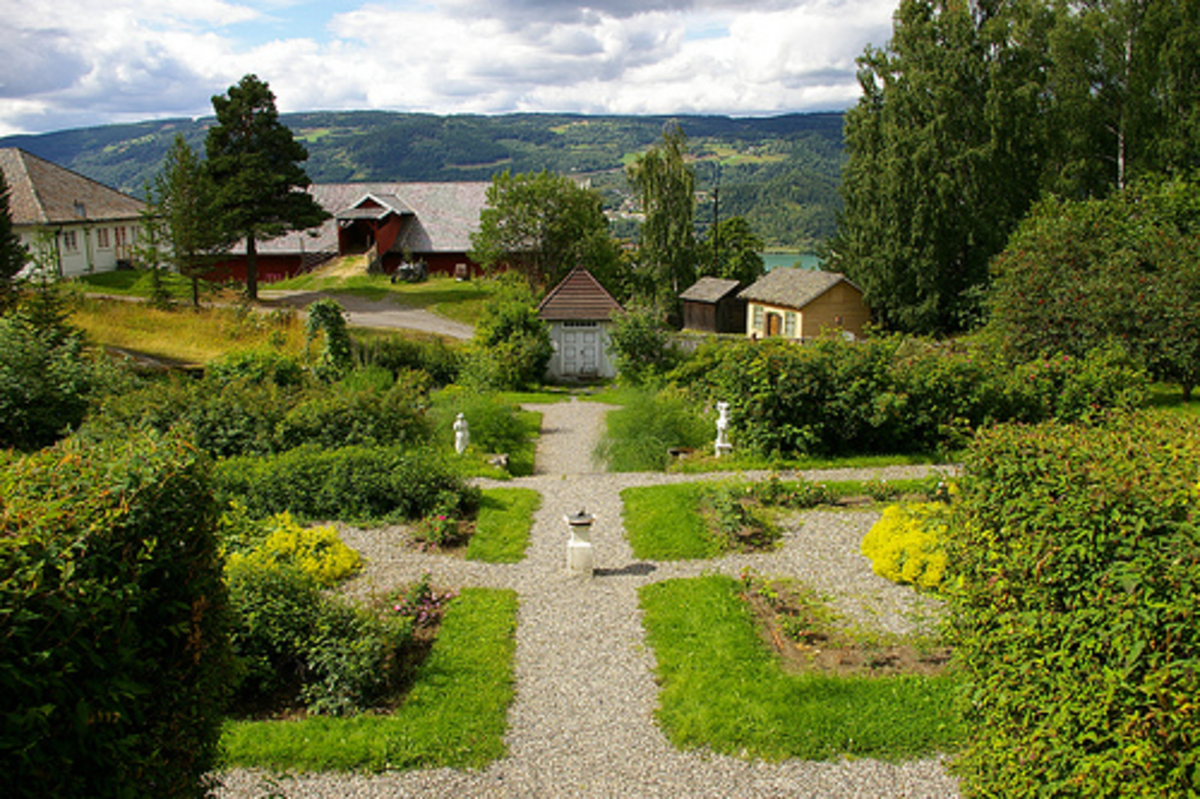
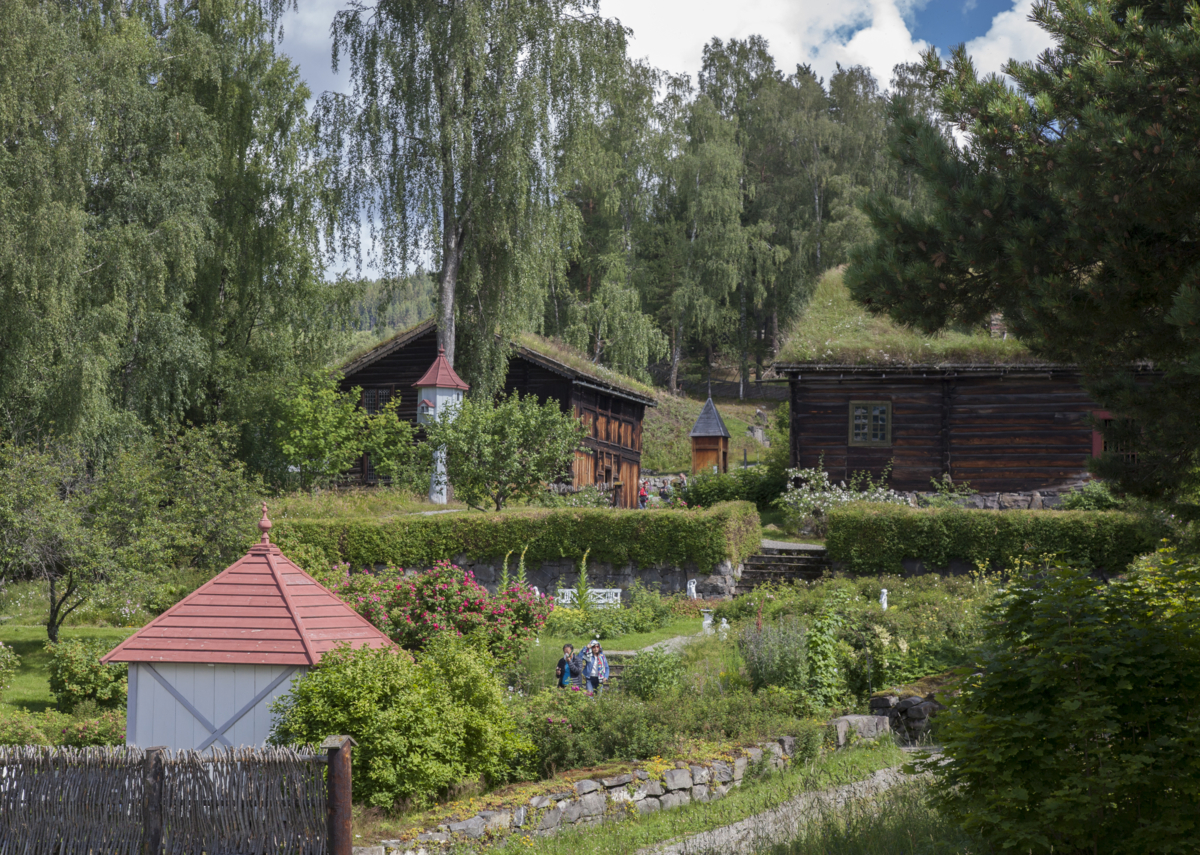
The garden is based on the terraced garden from Nordre Lunde in Lillehammer, once the home of a local bailiff. It also has modest influences from Renaissance gardens in Central Europe. Along the terraces, winding gravel paths reflect elements of the English landscape garden style, with a softer and less symmetrical design.
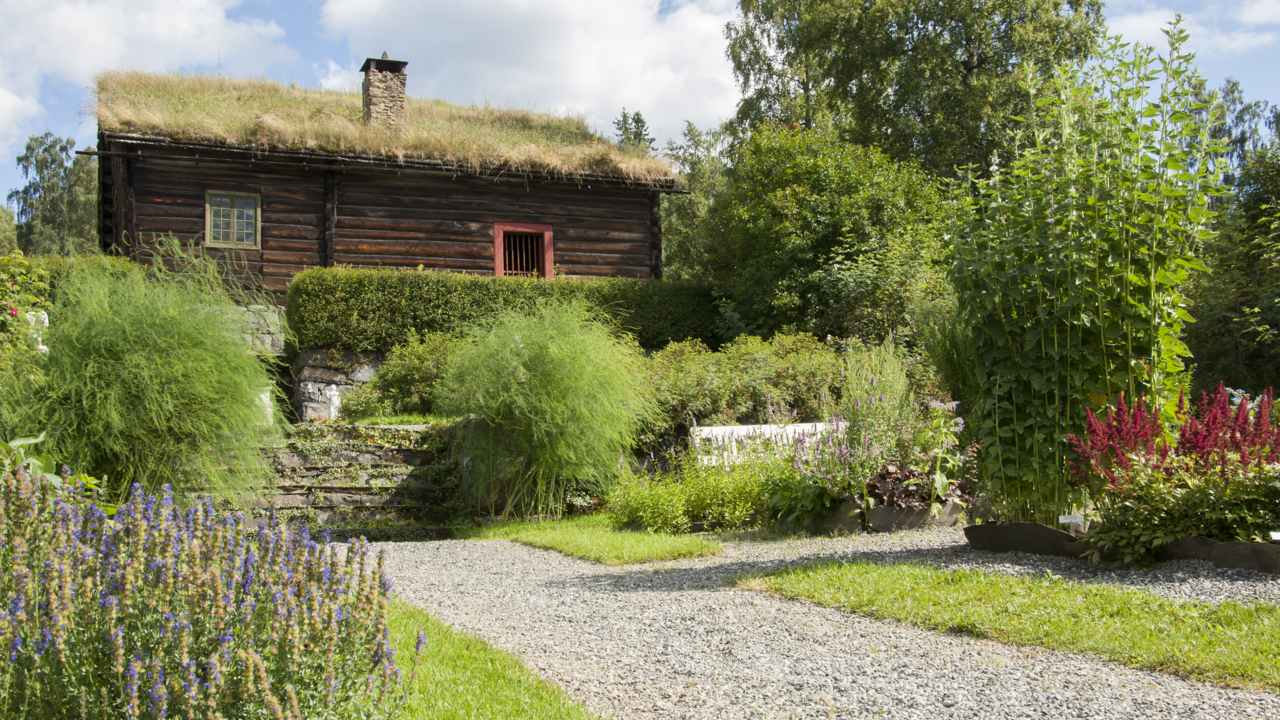
Explore herb beds, roses, fruit trees and berry bushes across three terraced levels. A central gravel path with steps leads through the garden, where you will also find a sundial and four sculptures representing the seasons. The sculptures are replicas of figures from the Billerud estate at Toten, where similar wooden sculptures were placed in the garden on special occasions.
Parsonage gardens played an important role in rural Norway in the 18th and 19th centuries. They were often places where new ideas in farming, gardening and food production were introduced. Ducks, doves and bees were commonly kept, and the dovecote and duck house in The Parsonage Garden reflect food traditions associated with official households rather than ordinary farms.
At the lower end of the garden, you will find a small pavilion inspired by the historic pavilion from 1810 that still stands in the parsonage garden in Vågå. The garden also includes a doll’s house from Sygard Storvik in Vågå. The dovecote was built in 1927, based on dovecotes from 19th-century official estates, while the duck house by Nordre pond belongs to the same historic setting.
Stroll through The Parsonage Garden and gain insight into Norwegian garden history, food traditions and the role of parsonage gardens in rural society.