Foto: Esben Haakenstad
The Mountain Farms
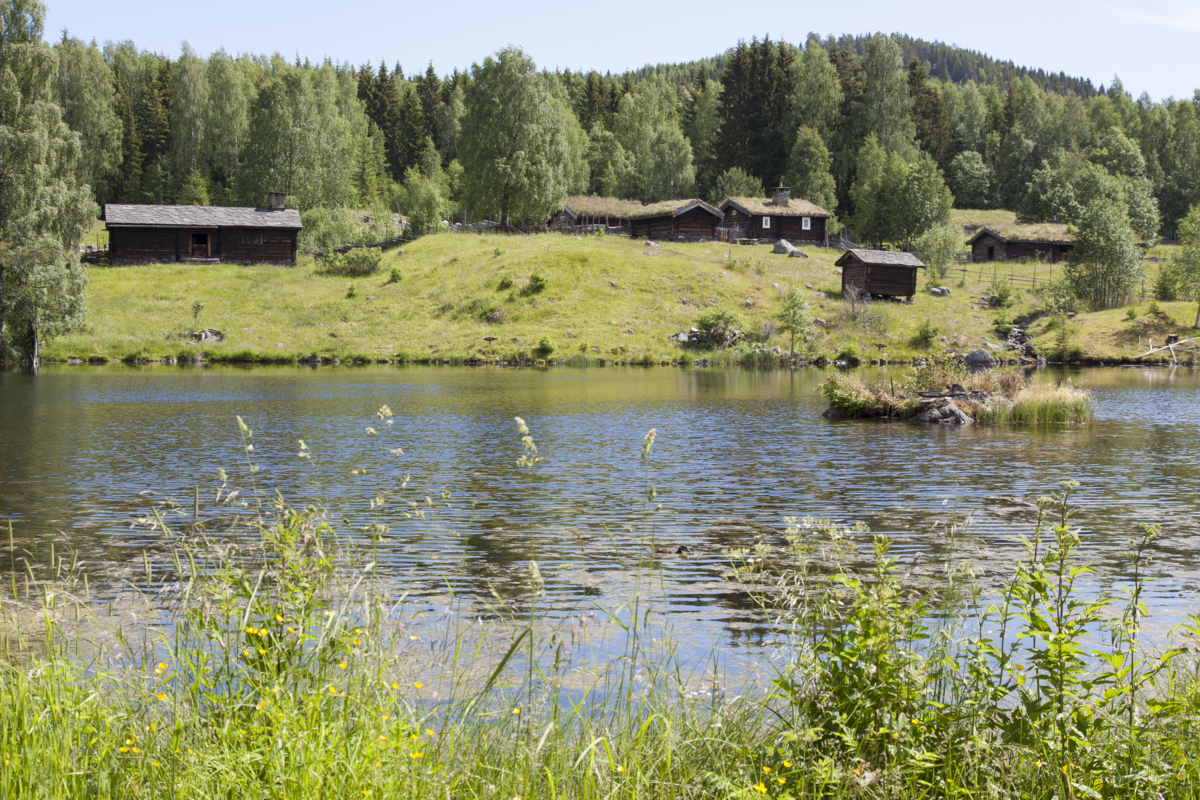
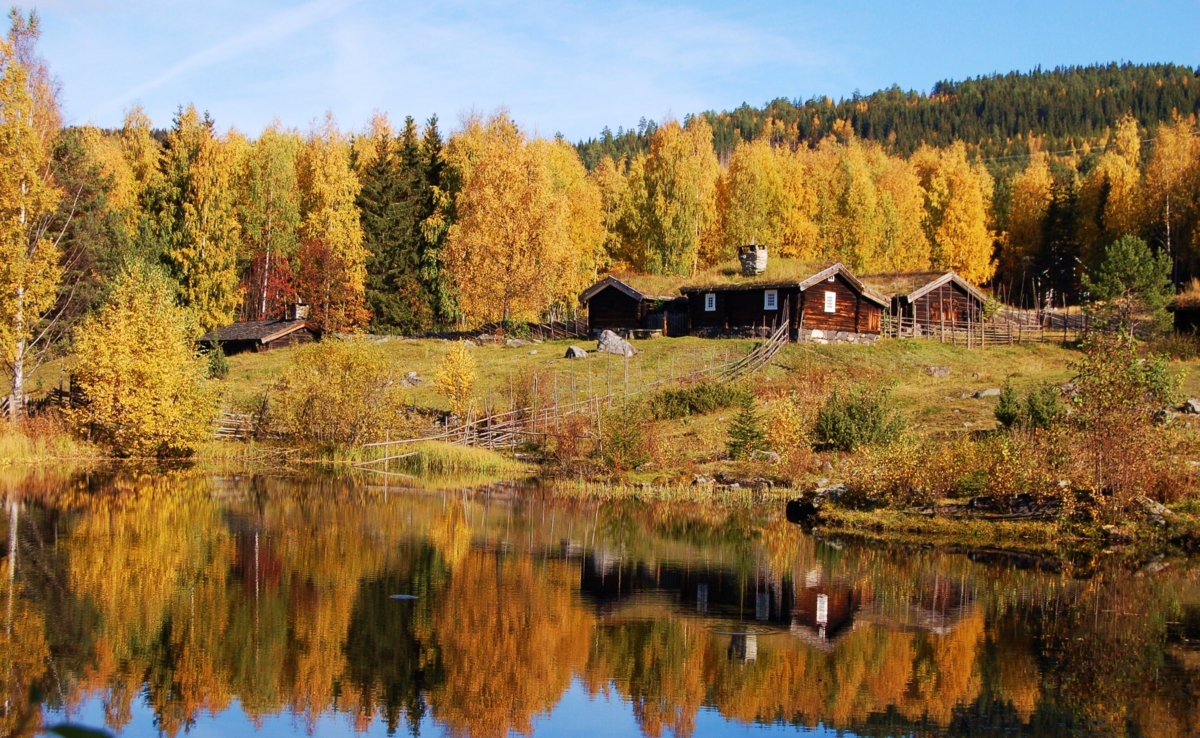
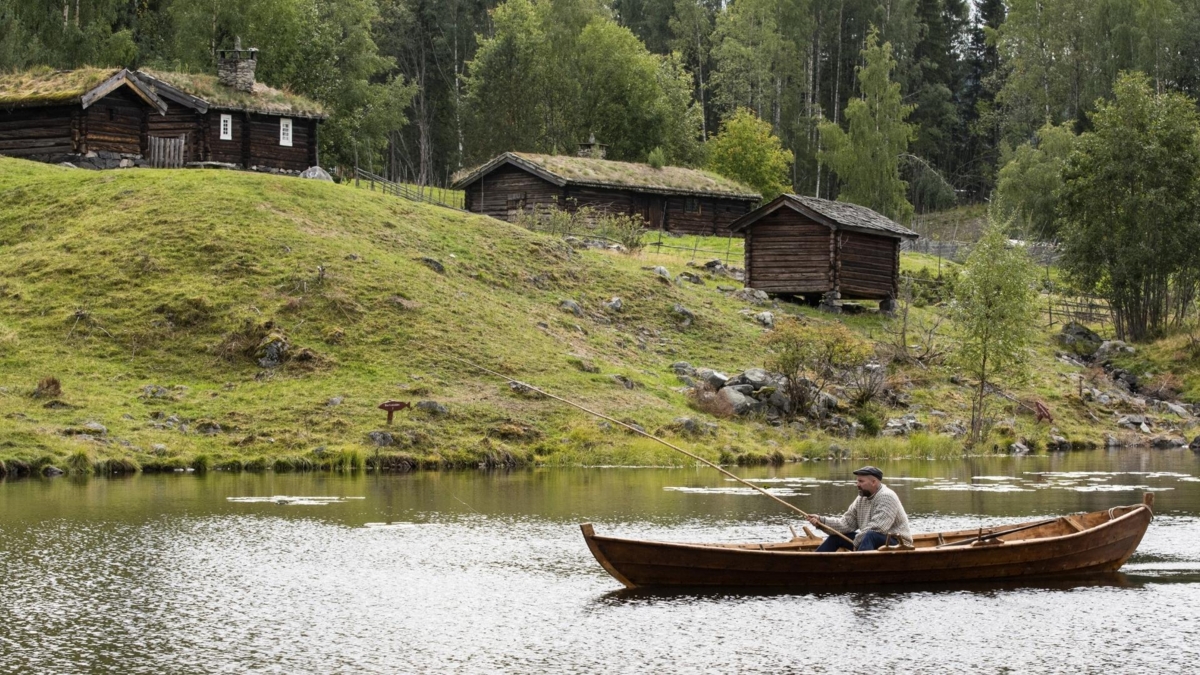
The hamlet shows how the summer dairy farms in Gudbrandsdalen evolved over time, from the simple one-room cabin to larger summer farms with several buildings. For centuries, the resources of the mountains and outlying fields formed the basis for settlement and livelihood, with agriculture and summer dairy farming playing an essential role.
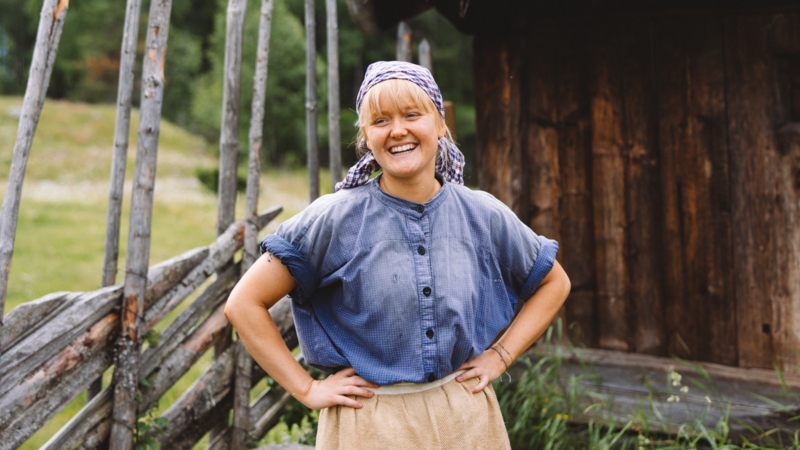
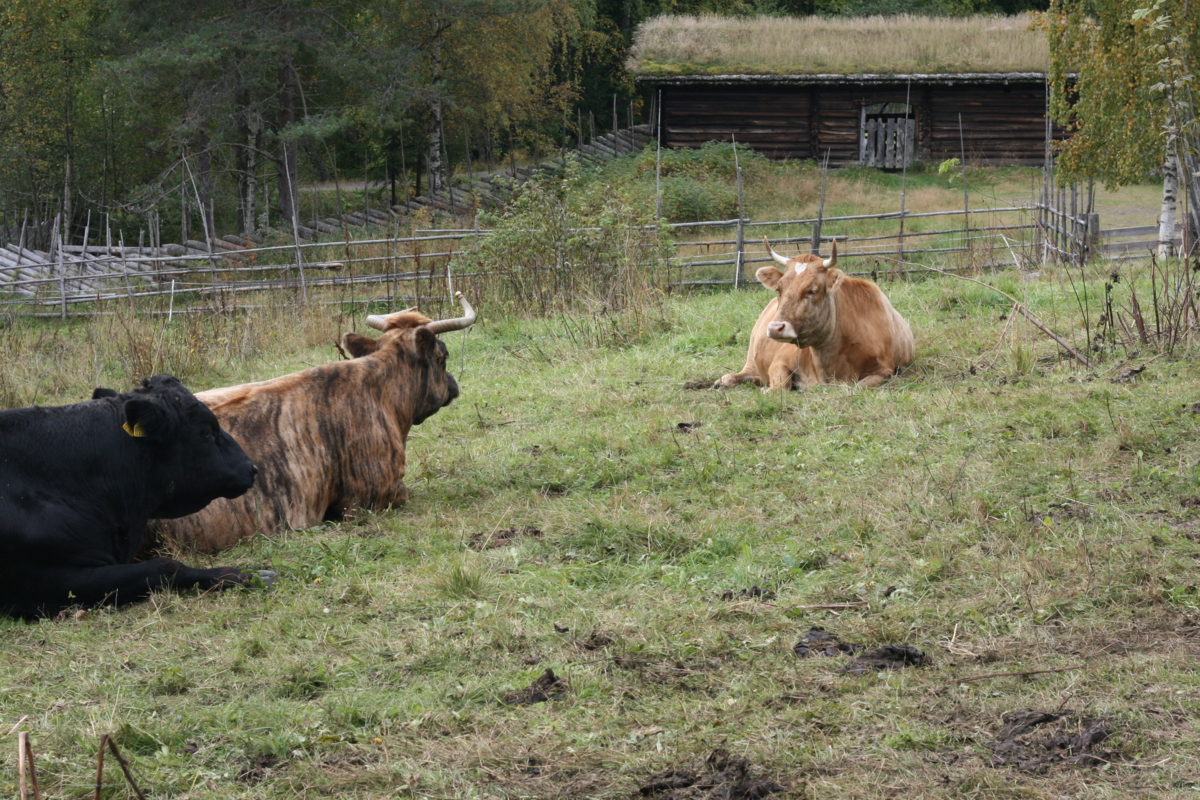
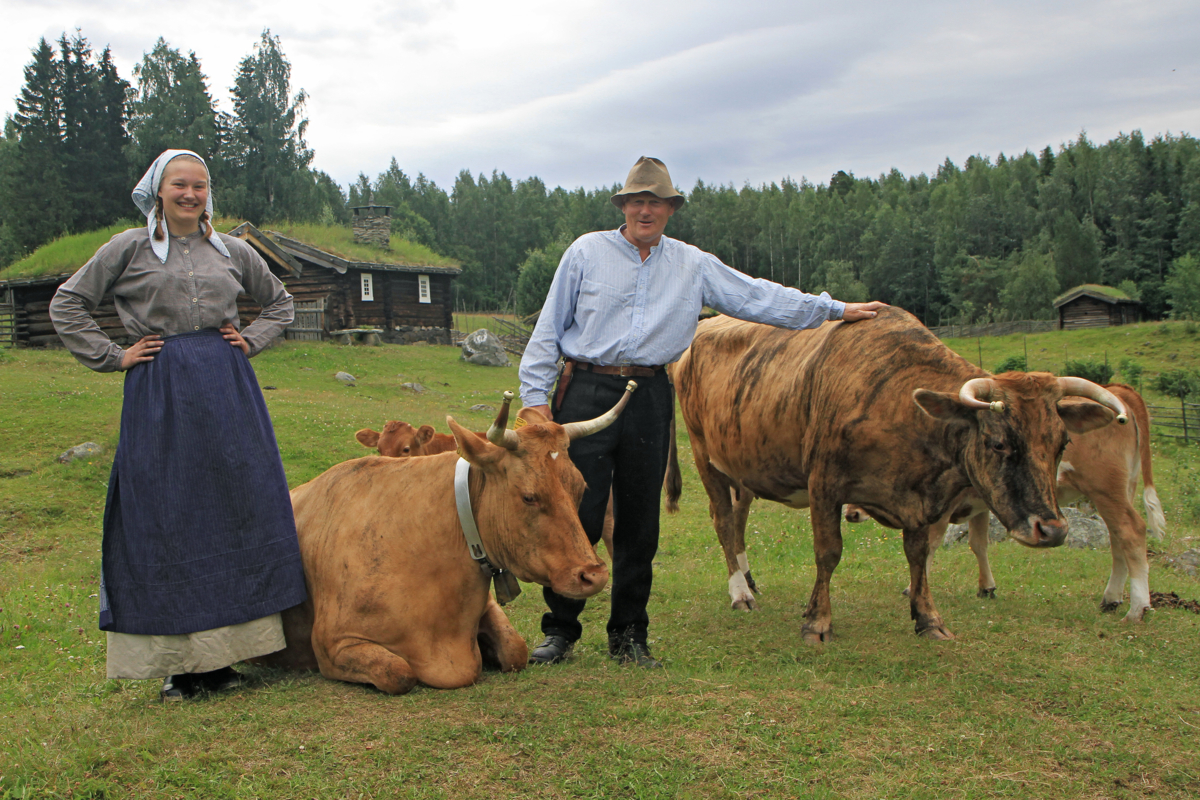
In early summer the livestock were moved to the summer farm as soon as the grazing was good enough, allowing the cultivated fields at home to be used for growing grain, potatoes, and other winter fodder. The dairymaid was responsible for the work at the summer farm. From the milk she produced butter, cheese, and sour cream, which were important sources of income for the farm.
Around 1900, roughly 100 000 summer farms were in operation in Norway. Today fewer than 1000 remain in use, but interest in summer dairy farming is once again growing. In 2024 Norwegian summer dairy farming culture was inscribed on UNESCO’s List of the Intangible Cultural Heritage of Humanity.
Explore the mountain farms at Maihaugen below.
.JPG)
Lesjabua
Lesjabua was built c. 1780. The building is from Lesjaskog in Lesja and was moved to Maihaugen in 1930. Lesjabua was built as a summer dairy farm building close to the tenant holding called Lykkja. In Gudbrandsdalen, it was not uncommon for tenant holdings to have summer dairy farms. Located a few hundred metres from the main holding, the building functioned as a local summer dairy farm used seasonally. Livestock were brought here in spring before the high mountain pastures were ready, and again in autumn when the mountain pastures became too cold. The dairymaid likely travelled back and forth each morning and evening to tend the animals and carry the milk home. The livestock were kept in a large enclosure made of rough-hewn timber. Later, Lesjabua was moved to the farm and converted into a stable.
Teigsetra
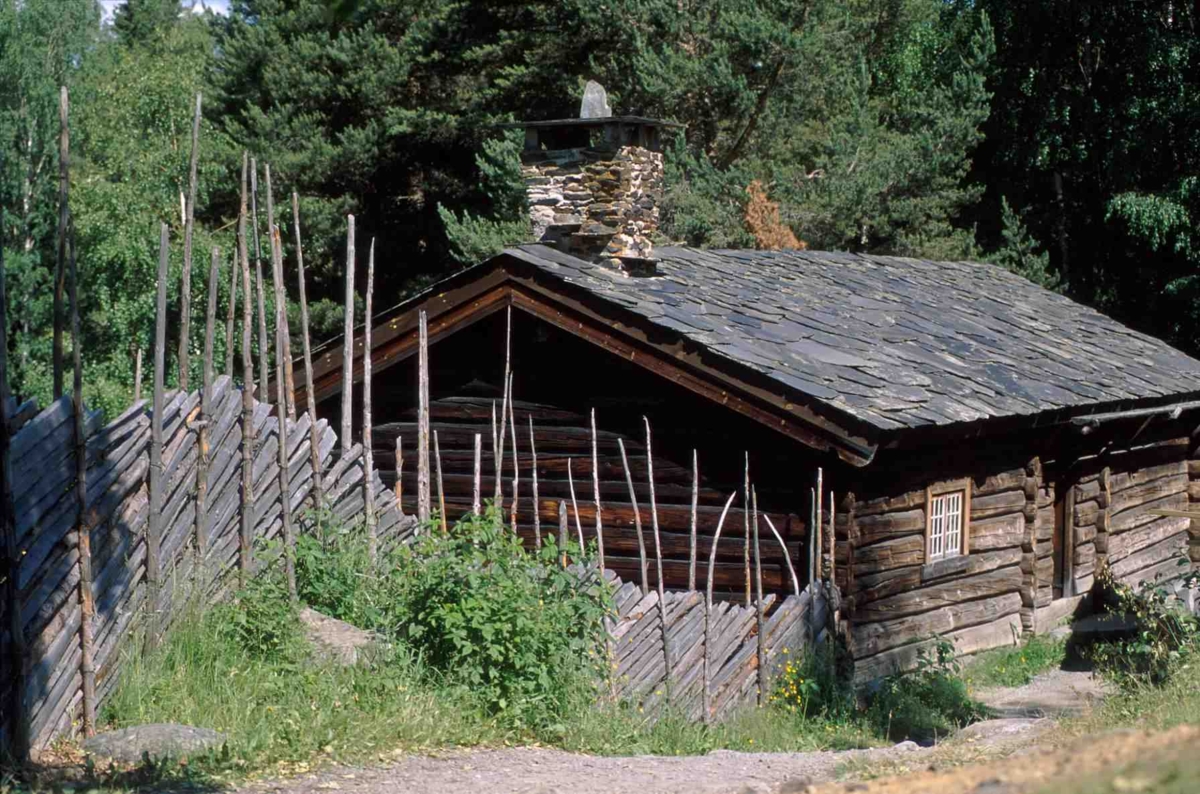
Teigsetra is from Nedre Teigen, a tenant holding of Tolstad Farm in Vågå, and was moved to Maihaugen in 1921. The main cabin dates from the 17th century, and the open passage and milk room are from the 18th century. The cabin has a gable entrance, an open hearth and a smoke vent in the roof. It has no windows, only small square openings that could be closed with wooden plugs. The separate milk store provided better working conditions for the dairymaid and improved milk storage.
Korpbergsetra
Korpbergsetra comes from Breistulen in Nord-Fron. It belonged to Melby Farm and was recorded in the 1668 land register. It was moved to Maihaugen in 1935. The layout represents a development from earlier summer dairy farms, with a cabin, an enclosed passage, a milk room and a cowshed under one roof. A fireplace and wooden floor were added in 1827, improving hygiene and creating a more comfortable living space.
Øygardsetra
Øygardsetra is from Finndalen in Lom and was moved to Maihaugen in 1922. The oldest cabin is of unknown date. It has two rooms, probably used as a living room and a storage room, with an open hearth and a smoke vent in the roof. After the new cabin was built in 1786, the old one was used as a hay barn and stable. The new cabin follows the same floor plan, with an external gallery along the long wall. It has wooden floors, windows and a fireplace, while the milk store has a stoneflagged earthen floor. The cowshed has twelve stalls arranged in two rows.
Barhussetra
Barhussetra from Skei in Gausdal was built c. 1800 and moved to Maihaugen in 1933. The cabin and cowshed are separate buildings, while the cabin, passage and milk room are combined under one roof. From the mid-19th century, new knowledge of dairy management emphasised keeping milk cool. The milk room was therefore placed at the opposite end of the building from the fireplace. The specialisation of rooms reflects a more advanced approach to dairying.
Lundesetra
Lundesetra from Venabygdsfjellet in Ringebu was built c. 1860 and moved to Maihaugen in 1964. This summer dairy farm belonged to Nedre Nordgard Lunde Farm in Venabygda and was in use until around 1955. At Maihaugen, Lundesetra stands out because parts of the building are in stone. Stone was often used as a building material in places where suitable timber was too far away, or when timber was scarce. The interior of the cabin reflects an advanced dairy practice, including a cream separator and cheese kettle. The cowshed has stall partitions made of large slate slabs.